A Telex Release is an important procedure in sea freight that helps expedite the release of goods at the port of destination without requiring the original Bill of Lading (B/L) to be presented at that port. This procedure is used once the requirements related to the Bill of Lading have been completed and electronic release instructions have been issued to the carrier or its agent at the destination port.
As the maritime transport sector continues to evolve and businesses increasingly adopt digital solutions, the electronic exchange of shipping instructions has become an important way to reduce reliance on paper documents and accelerate logistics operations.
What Is a Telex Release?
A Telex Release is an electronic instruction issued by the carrier authorizing the release of a shipment at the port of destination after the required procedures have been completed and the original Bill of Lading has been surrendered or otherwise relinquished in accordance with the carrier's requirements.
It is important to clarify that a Telex Release is not a separate type of Bill of Lading, nor does it mean that the original Bill of Lading is canceled. Instead, it is a procedure that allows the carrier to release the goods without requiring the original Bill of Lading to be presented at the destination port.
This method is particularly useful when the shipper and consignee are located in different countries and sending the original documents to the destination port could delay the collection of the shipment.
How Does the Telex Release Process Work?
The Telex Release process generally involves several steps, although the specific requirements may vary depending on the shipping company and the type of Bill of Lading.
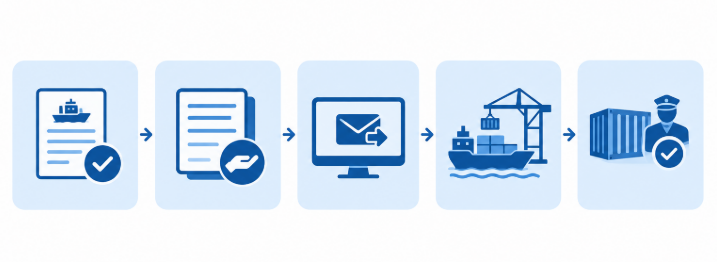
- Issuance of the Bill of Lading: The carrier issues the Bill of Lading containing details of the shipment, shipper, consignee, ports, and container numbers.
- Surrender of the Original Bill of Lading: The shipper surrenders the original documents to the carrier or completes the procedures specified by the carrier for relinquishing them.
- Requesting a Telex Release: After meeting the financial and documentation requirements, the shipper submits a Telex Release request to the shipping company.
- Issuance of Release Instructions: Once the request is approved, the carrier sends electronic instructions to its agent at the destination port authorizing the release of the goods.
- Completion of Collection Procedures: The importer completes customs clearance and pays the required duties, fees, and charges before collecting the shipment.
When Should a Shipper Use a Telex Release?
A Telex Release can be used in several situations, including the following:
Expediting Shipment Collection
When the vessel has arrived or is approaching the destination port while the original Bill of Lading is still in another country.
Avoiding Document Delays
A Telex Release helps reduce the time required to send original documents between the shipper and the importer.
Reducing Document Shipping Costs
It can reduce the need to send paper Bills of Lading through postal or express courier services.
Simplifying Logistics Operations
It helps improve coordination between the shipper, carrier, agent, and importer, particularly for international shipments.
Key Benefits of a Telex Release
A Telex Release offers several benefits in sea freight operations, including:
- Time savings by reducing the waiting time associated with original documents.
- Faster cargo release once the carrier's requirements have been met.
- Reduced risk of losing paper documents while they are being transported between countries.
- Lower document delivery costs by reducing the need to ship original paperwork.
- Improved logistics efficiency through the use of electronic release instructions.
However, a Telex Release does not mean that all import procedures have been completed. The importer must still complete customs clearance, pay the applicable duties, and meet any additional requirements imposed by the relevant authorities.
Difference Between Telex Release, Bill of Lading, and Sea Waybill
These terms have distinct meanings in sea freight.
Original Bill of Lading
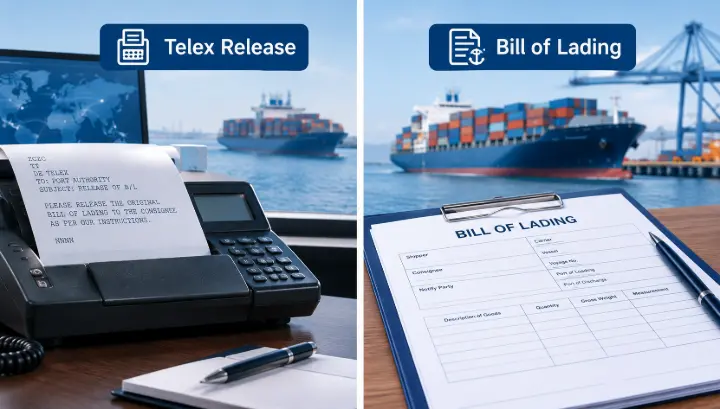
An Original Bill of Lading (B/L) is a transport document issued by the carrier that contains details of the shipment and the parties involved in the transportation process. In some cases, it is negotiable and may be associated with control over the goods, depending on the type of Bill of Lading and the terms of the transaction.
Telex Release
A Telex Release is a cargo release procedure that allows the carrier at the destination port to release the goods without requiring the original Bill of Lading to be presented there, provided the carrier's specified requirements have been met.
Sea Waybill
A Sea Waybill is generally a non-negotiable transport document. It does not require the presentation of an original negotiable Bill of Lading for the goods to be released to the designated party, subject to the carrier's terms and conditions.
Therefore, Telex Release should not be used as a synonym for Sea Waybill, as each has a different nature and purpose.
Telex Release in the UAE
Telex Release is used in sea freight shipments to the UAE to facilitate the release of certain shipments arriving at the country's ports, particularly when the original shipping documents are located outside the UAE.
However, a Telex Release does not replace customs clearance or the payment of applicable duties and charges. The requirements for this procedure may also vary from one shipping line to another.
Shippers and importers are therefore advised to confirm the required documents and conditions with the shipping company or its agent in the UAE before requesting a Telex Release.
Conclusion
A Telex Release is a solution that helps expedite the release of sea freight shipments and reduces reliance on the physical transportation of paper documents between countries. It is particularly useful when a shipment is approaching its destination port while the original Bill of Lading is located elsewhere.
Nevertheless, a Telex Release is not an independent replacement for the Bill of Lading. Instead, it is an electronic cargo release procedure carried out in accordance with the carrier's requirements and after the necessary conditions have been fulfilled
In the UAE, customs clearance and all other applicable cargo release requirements must also be completed before the goods can be collected..