Customs Tariff and the Difference Between It and the Harmonized System (HS Code) in the United Arab Emirates
International trade is one of the key pillars of the UAE economy, with millions of shipments entering and leaving the country each year through its various ports and airports. To regulate import and export activities and determine the applicable duties on goods, customs authorities rely on two closely related systems: the Customs Tariff and the Harmonized System Code (HS Code).
Although these two terms are closely connected, many importers and exporters confuse them. In this article, we explain the difference between the Customs Tariff and the HS Code and highlight the importance of each in international trade operations within the United Arab Emirates.
What Is a Customs Tariff?
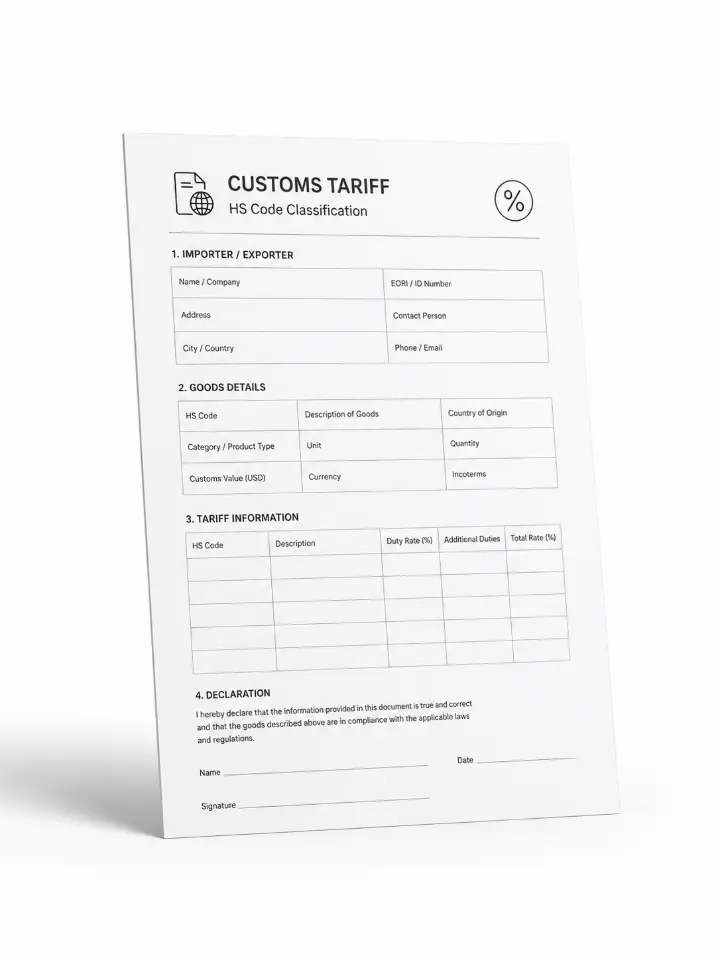
The Customs Tariff refers to the duties or taxes imposed by customs authorities on imported or exported goods when they cross international borders. These duties serve several purposes, including:
- Regulating international trade.
- Protecting certain local industries.
- Generating government revenue.
- Controlling the import of certain sensitive or restricted goods.
In the United Arab Emirates, customs duties are determined according to the classification, type, and commercial value of the goods. Customs duties are applied within the framework of the Unified GCC Customs Tariff, with certain goods being exempt from duties or subject to special treatment and charges depending on the applicable laws and regulations.
What Is the Harmonized System Code (HS Code)?
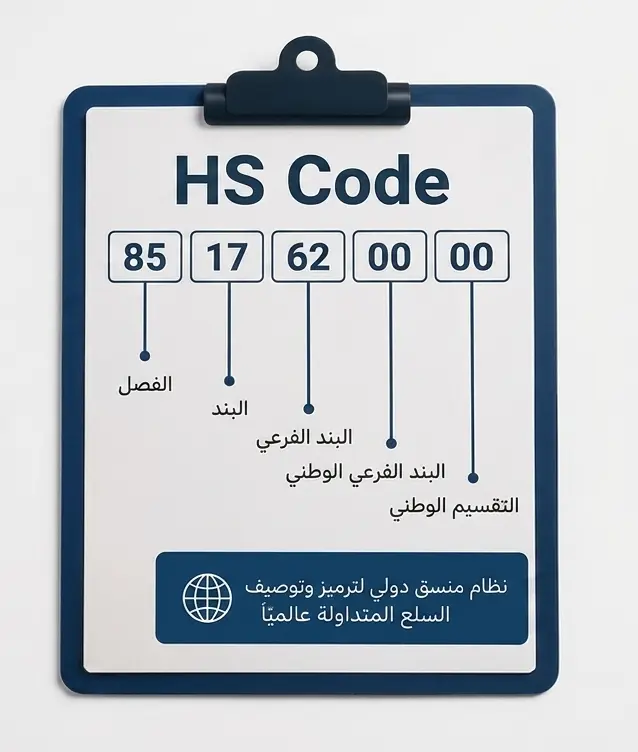
The Harmonized System Code (HS Code) is a globally recognized system for classifying goods and products traded internationally. It was developed by the World Customs Organization (WCO).
The basic HS Code consists of six digits that are used internationally to identify products according to their classification. Countries and economic blocs may add additional digits to provide a more detailed classification.
The UAE and GCC countries use a more detailed customs classification that can extend to 12 digits under the Unified GCC Customs Tariff. This allows goods to be classified more accurately and helps determine the applicable duties and regulatory requirements.
For example:
- Chapter 84: Machinery and mechanical equipment.
- Chapter 85: Electrical and electronic equipment.
- Chapter 39: Plastics and plastic products.
Choosing the correct HS Code is one of the most important steps when importing or exporting goods, as incorrect classification may result in customs clearance delays or the application of incorrect duties.
What Is the Difference Between the Customs Tariff and the HS Code?
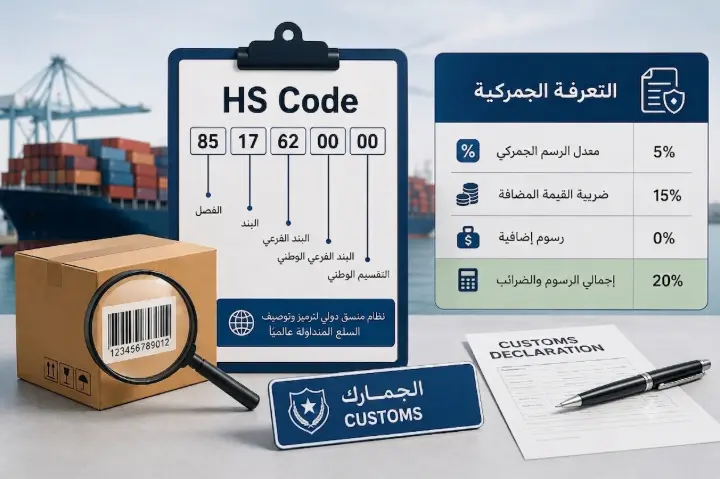
Although these two terms are frequently used together, each has a different function.
| Element | Customs Tariff | HS Code |
|---|---|---|
| Definition | Duties imposed on goods | A classification code for goods |
| Purpose | Determines the customs duties payable | Identifies and classifies the goods accurately |
| Form | Percentage or monetary amount | Classification numbers |
| Use | Calculating customs duties | Classifying products within customs systems |
| Impact | Affects the cost of importing goods | Helps determine duties and regulatory procedures |
Simply put:
The HS Code is the key used by customs authorities to determine the appropriate Customs Tariff for a product.
Practical Example of the Difference Between the Customs Tariff and HS Code
Suppose a company in the UAE wants to import paper cups or printed packaging bags from abroad.
First, the appropriate HS Code for the product is determined based on its type, material, and intended use. The Customs Tariff is then consulted to determine the applicable duties and regulatory requirements associated with that classification.
In other words, the HS Code does not represent a customs duty itself. It is a code used to classify the product. The Customs Tariff, on the other hand, represents the duties imposed on the goods based on their classification.
Therefore, the HS Code can be considered the customs identity of the product, while the Customs Tariff represents the duties or costs associated with that classification.
How Are the Customs Tariff and HS Code Connected?
When a shipment arrives in the UAE, customs authorities determine the appropriate HS Code for the product. Once the correct classification has been established, the Customs Tariff is consulted to determine:
- The applicable customs duty rate.
- Regulatory requirements for the goods.
- Any restrictions or permits required.
- Potential customs exemptions.
Therefore, any error in selecting the correct HS Code may result in the application of an incorrect customs tariff or delays in customs clearance procedures.
Conclusion
The Harmonized System Code (HS Code) and the Customs Tariff are two essential elements of import and export operations in the United Arab Emirates. While the HS Code is used to identify and classify goods, the Customs Tariff is used to determine the duties applicable to those goods.
Understanding the difference between the two and using the correct classification can help businesses avoid customs errors, speed up customs clearance, reduce costs, and ensure full compliance with trade regulations in the UAE.