Shipment tracking has become an essential part of trade, transportation, and logistics operations in the UAE, whether for domestic or international shipments. With the expansion of import and export activities through the country's ports and airports, having accurate information about a shipment's location and status has become increasingly important for businesses and individuals.
Shipment tracking relies on various reference numbers and documents. The number required depends on the type of shipment, the mode of transportation, and the shipping company or carrier.
In the UAE, logistics companies and service operators provide digital platforms that allow customers to track shipments and containers and view their latest recorded status. These services improve visibility across transportation operations and supply chains.
What Is Shipment Tracking?
Shipment tracking is the process of monitoring goods as they move through different stages of transportation, from the initial collection of a shipment to its final delivery to the recipient.
Tracking updates may include information such as:
- Shipment received from the sender.
- Arrival at a sorting or consolidation center.
- Departure from a shipping facility.
- Arrival at an airport or seaport.
- Movement to another country or city.
- Arrival at a distribution facility.
- Out for delivery.
- Final delivery completed.
The details and frequency of tracking updates vary between shipping companies and transportation methods.
Why Is Shipment Tracking Important?
The UAE's strategic location makes it a major hub for trade and logistics. As a result, businesses handle shipments that pass through seaports, airports, free zones, and distribution centers.
Shipment tracking systems help businesses and individuals to:
- Identify the shipment's latest recorded location.
- Monitor transportation progress throughout the journey.
- Estimate the expected arrival time.
- Identify potential delays at an early stage.
- Improve collection and delivery planning.
- Reduce the need for repeated inquiries.
- Gain better visibility into the movement of goods across the supply chain.
Key Shipping Reference Numbers Used for Tracking
There is no single reference number used for every type of shipment. Understanding which number applies to each shipment is therefore essential.
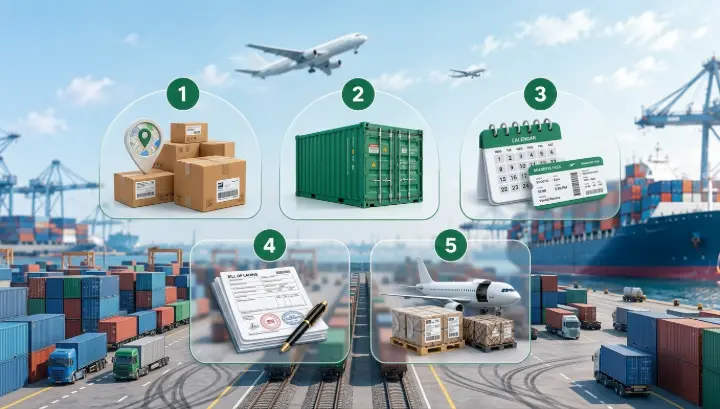
1. Tracking Number
A Tracking Number is widely used for postal and express shipments. It is assigned to a specific shipment and can be entered into the carrier's tracking platform to retrieve shipment information.
For example, Emirates Post allows customers to enter a tracking number to monitor domestic and international shipments. Its tracking service also supports tracking multiple shipments at the same time.
2. Container Number
A Container Number is primarily used in sea freight. Each shipping container has its own unique identification number.
This number can be entered into the tracking systems provided by shipping lines or port operators to check the container's status and movement throughout its journey.
3. Booking Number
A Booking Number is issued when a shipment is booked with a transportation company or shipping line.
4. Bill of Lading Number
The Bill of Lading (B/L) is one of the most important documents in sea freight and international trade. It contains essential information about the shipment, shipper, consignee, and carrier.
Some carrier tracking systems allow customers to use the Bill of Lading number to retrieve shipment or voyage information.
5. Air Waybill Number (AWB)
In air freight, the Air Waybill (AWB) number serves as a primary reference for the shipment.
Airlines and freight forwarders use this number to track shipments throughout the various stages of air transportation.
How to Track Sea Freight Shipments in the UAE
Sea freight shipments are generally tracked using a Container Number, Booking Number, or Bill of Lading Number, depending on the carrier or shipping line.
A sea freight shipment may pass through several stages, including the following:
Booking Stage
The shipment details are registered, and the required space on the vessel is booked.
Container Handover
The container is handed over to the designated party in preparation for its entry into the port.
Port Entry
Information relating to the container's arrival at the port and the completion of operational procedures becomes available.
Loading Stage
The container is prepared and loaded onto the vessel according to the voyage schedule.
In Transit
The vessel departs from the port of loading and begins its journey to the destination port.
Arrival at a UAE Port
When the vessel arrives, procedures related to container discharge and shipment handling begin.
Customs Clearance and Delivery
Once the required procedures have been completed, the shipment moves to the next stage of transportation until it reaches the recipient.
DP World provides maritime services that include Track & Trace tools, schedules, and shipping-related information. Some of its digital services also provide container status information, vessel berthing schedules, and truck movement updates.
Tracking Air Freight Shipments in the UAE
Air freight is one of the most important transportation methods for businesses that require faster delivery of goods.
Air shipments are generally tracked using the AWB number issued when the Air Waybill is created.
Shipment tracking updates may include:
- Cargo received from the sender.
- Shipment prepared for air transportation.
- Arrival at a cargo facility.
- Loaded onto the aircraft.
- Departure from the origin airport.
- Arrival at the destination airport.
- Customs clearance, where applicable.
- Transfer to the delivery company.
- Final delivery.
The timing and availability of these updates vary depending on the airline, freight forwarder, and tracking system used.
How to Track Domestic and International Shipments from the UAE
If a shipment is sent through Emirates Post, customers can use its official tracking service and enter the shipment number to view the latest available update.
Under the applicable conditions, the Emirates Post tracking platform supports tracking numbers of up to 13 characters.
For commercial, sea freight, and air freight shipments, tracking may instead be available through the shipping company, carrier, or freight forwarder using the appropriate shipment reference number.
Shipping method + Carrier or shipping company + Tracking number or reference number
What Do Shipment Tracking Statuses Mean?
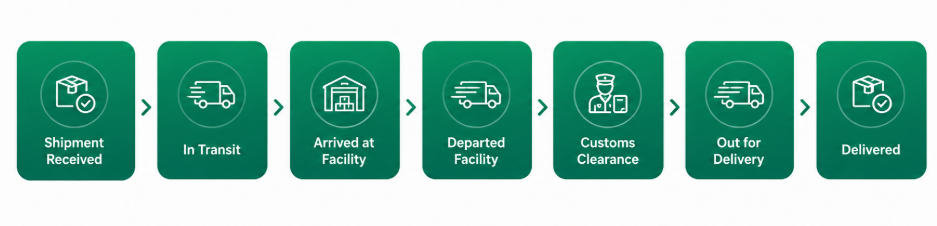
Several terms may appear when checking a shipment's status. The most common include:
| Shipment Status | Meaning |
|---|---|
| Shipment Received | The shipment has been received. |
| In Transit | The shipment is currently in transit. |
| Arrived at Facility | The shipment has arrived at a facility or processing center. |
| Departed Facility | The shipment has left the facility. |
| Customs Clearance | The shipment is undergoing customs clearance procedures. |
| Out for Delivery | The shipment is out for delivery. |
| Delivered | The shipment has been delivered. |
Tracking records published through the Emirates Post platform show that a shipment may pass through several stages, including receipt, processing, sorting, arrival at a delivery facility, dispatch for delivery, and final delivery.
Why Might Shipment Tracking Updates Be Delayed?
A lack of new tracking updates does not necessarily mean that there is a problem with the shipment.
Possible reasons include:
- The shipment is being transferred between different carriers.
- The latest stage has not yet been recorded in the tracking system.
- The shipment is undergoing customs procedures.
- The shipment is waiting to arrive at the next processing center.
- Different systems update their information at different times.
- Operational factors are affecting ports or airports.
- Holidays or congestion during peak shipping seasons are causing delays.
It is therefore advisable to review the latest recorded status and the time elapsed since the last update before concluding that a shipment is delayed.
What Is the Difference Between Shipment Tracking and Container Tracking?
There is an important distinction between the two.
Shipment tracking focuses on the goods or parcel itself and typically uses a Tracking Number or Bill of Lading Number.
Container tracking, on the other hand, focuses on the container used for sea transportation. It may provide information about the container's location and status throughout the sea voyage.
A container may carry a single shipment or multiple shipments, depending on the type of transportation and cargo arrangement.
The Role of Technology in Improving Shipment Tracking
Shipment tracking is no longer limited to identifying the location of goods. It has become an essential component of supply chain management, with digital technologies helping businesses improve shipment visibility, monitor cargo movement, and analyze logistics-related data.
Modern tracking systems provide more accurate information about shipment locations and routes, whether in sea freight or air freight. They can also help identify potential delays or deviations, supporting faster decision-making and improving operational efficiency.
Furthermore, the integration of tracking technologies with data analytics has become an important factor in the development of shipping and transportation services. It gives businesses and customers a clearer view of cargo movement while supporting better planning and reducing risks associated with transportation and delays.
Important Tips for Tracking Shipments in the UAE
To obtain more accurate tracking results, consider the following recommendations:
- Keep all shipment reference numbers and shipping documents.
- Make sure the reference number is entered correctly.
- Use the official platform of the shipping company or carrier.
- Do not rely on a Booking Number if the tracking system requires a Container Number or Bill of Lading Number.
- Check the latest update and the date it was recorded.
- Keep the shipping company's contact details available for follow-up.
- For commercial shipments, monitor customs clearance and delivery status as well.
- If tracking updates stop for an unusually long period, contact the carrier or freight forwarder.
Conclusion
Shipment tracking has become an essential part of transportation and international trade operations in the UAE, particularly as businesses rely on different shipping methods, including sea, air, and land freight.
Successful shipment tracking depends on using the correct reference number, whether it is a Tracking Number, Container Number, Booking Number, AWB, or Bill of Lading Number, and entering it into the appropriate carrier or shipping company's tracking platform.
As the UAE continues to develop its logistics infrastructure and businesses increasingly adopt digital solutions, monitoring cargo movement has become more accessible and transparent. This helps importers, exporters, and businesses improve planning, reduce delays, and gain better visibility across the supply chain.